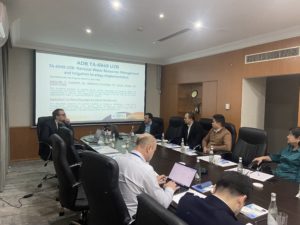
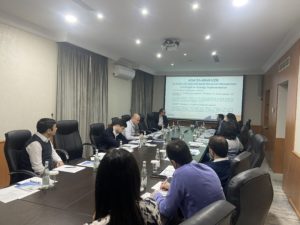
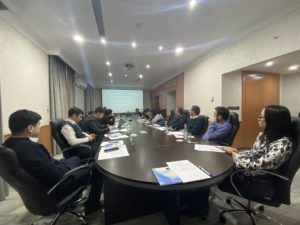
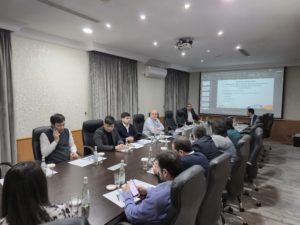
On 10 December 2025, a final seminar for the project TA-6949 UZB: Implementation of the National Water Resources Management and Irrigation Strategy was held in Tashkent. The project aims to support sustainable water resources management and the modernization of Uzbekistan’s irrigation system. The seminar served as a platform for experience sharing among government authorities, international experts, and research institutions, as well as for assessing the project’s achievements and formulating recommendations for the further development of the sector.
Project Context
Project TA-6949 UZB is implemented within the framework of Uzbekistan’s national strategy for the rational use of water resources and the modernization of irrigation infrastructure.
Key Areas of Project Implementation
Project TA-6949 covered several key areas, each of which was discussed in detail during the seminar:
- Output 1: Institutional capacity assessed and strengthened.
- Output 2: Procedures for prioritizing modernization investments established
- Output 3: Improved sustainability and O&M arrangements supported.
The project is implemented by the consulting company Alterra Teams in cooperation with the international organization Cowater International Finland (formerly FCG Finnish Consulting Group Oy), with the active support of the Ministry of Water Resources of the Republic of Uzbekistan (MWR) and its regional departments.
Objectives and Agenda of the Final Seminar
The main objectives of the final seminar were to:
-
Summarize the overall results of project implementation;
-
Present the outcomes of implemented methodologies and technologies;
-
Discuss investment priorities for the modernization of irrigation infrastructure;
-
Formulate recommendations for further improvement of water resources management;
-
Facilitate knowledge exchange between local and international experts.
The seminar provided a platform for interaction among participants, including representatives of government agencies, international financial institutions, research organizations, and the private sector.
Project Results and Achievements
At the final seminar, key project achievements were presented, including the development of 15 guiding documents aimed at supporting the implementation of the sector’s strategic goals and objectives:
- Working Paper on the New Water Code
- Guidance Document on Support to the Implementation of the Uzbekistan’s Water Resources Strategies and Policies
- Guidance Document on Developing a Climate-Resilient Asset Management System Structure
- Technical, Economic and Environmental Impact Assessment of Concrete Lining for Modernized Irrigation Systems
- Working Document on Institutional Capacity Assessment and Capacity-Building Needs
- Guiding Document on Institutional Reforms and Planning Processes
- Guiding Document on Salinity Management
- Guiding Document on Cost-Recovery Mechanisms for Operation, Management, and Maintenance
- Guiding Document on Improved Procedures for Surveying, Design, and Construction of Irrigation Systems
- Working Document on Agreed Research Topics and Institutions
- Approaches to Addressing Environmental Impact Issues in Water Resources and Irrigation Management
- Water Equity: Stakeholder Guidance on Gender-Integrated Resource Management
- Guiding Document on the Selection and Prioritization of Investments for Irrigation Modernization
- Guidance on the Implementation of Water-Saving Technologies
- Guidance on New Water Allocation Procedures
Discussions and Participants’ Recommendations
During the discussions, seminar participants addressed several key issues, including:
-
The Water Code of Uzbekistan and the need for further efforts to ensure its effective implementation. Participants emphasized the importance of continued modernization of the sector’s legal framework.
-
Integration of digital technologies, highlighting the need for further digitalization of irrigation network management, including digital asset management tools, water monitoring systems, and automation of operational processes.
-
Water taxation and water use charges, with discussions focusing on the impact of the new payment system on the sustainable functioning and long-term development of the sector.
Conclusion
The final seminar of Project TA-6949 UZB represented an important milestone in the implementation of Uzbekistan’s national objectives in water resources management and irrigation. It enabled a comprehensive assessment of achieved results and the development of practical recommendations for the sector’s future advancement.
Implementation of the project’s recommendations will help establish a sustainable foundation for the rational use of water resources, enhance food security, and support the sustainable economic development of Uzbekistan.
#TA6949UZB #WaterResourcesManagement #Irrigation #NationalWaterStrategy #SustainableDevelopment #IrrigationModernization #ClimateResilience #InstitutionalCapacity #Uzbekistan